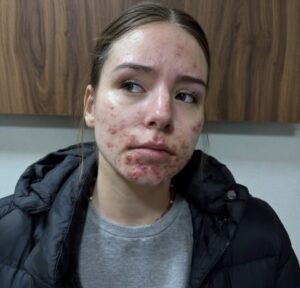
Severe facial acne, like the kind many young women experience in their late teens and early twenties, is more than just a surface-level skin issue. It reflects a complex interaction between hormones, genetics, skin biology, and lifestyle factors, including diet.
What appears as red, inflamed pimples or painful cysts is actually the visible result of deeper processes happening within the skin—processes that repeat and intensify when underlying triggers remain unaddressed.
 How Pimples Actually Form
Acne begins inside the pilosebaceous unit (hair follicle + oil gland).
The process happens in stages:
- Excess oil (sebum) production
Hormones stimulate oil glands to produce more sebum than needed. - Clogging of pores
Dead skin cells don’t shed properly and mix with oil → forming a blockage (microcomedone). - Bacterial growth
The bacteria Cutibacterium acnes multiplies inside the clogged pore. - Inflammation
The immune system reacts → redness, swelling, pus, and sometimes deep cysts.
 This is why acne can become:
- Painful
- Persistent
- Prone to scarring
 The Role of Hormones
Hormones are one of the strongest drivers of acne—especially in young women.
Key factors include:
- Increased androgens (like testosterone)
- Fluctuations during the menstrual cycle
- Stress hormones (like cortisol)
These lead to:
 More oil production
Enlarged pores
Increased inflammation
Conditions like Polycystic Ovary Syndrome or insulin resistance can make acne even more persistent, especially around:
- Jawline
- Chin
- Lower cheeks
 Genetics: Why Some People Struggle More
Not everyone reacts the same way.
Genetics can determine:
- How much oil your skin produces
- How your immune system reacts
- How easily pores clog
This explains why:
- Some people get occasional pimples
- Others experience severe, widespread acne
 Diet and Acne: The Hidden Connection
Diet doesn’t cause acne on its own—but it can significantly worsen it, especially in sensitive individuals.
 1. High-Glycemic Foods (Sugar & Refined Carbs)
Examples:
- White bread, pastries
- Sugary drinks
- Processed snacks
These spike blood sugar → increase insulin → raise IGF-1 (insulin-like growth factor)
Result:
- More oil production
- Faster skin cell buildup
- Increased inflammation
 2. Dairy Products
Milk (especially skim milk) is linked to acne because it:
- Contains natural hormones
- Raises IGF-1 levels
- Stimulates oil glands
For some people, reducing dairy can noticeably improve skin.
 3. Chocolate & Sugary Snacks
Especially milk chocolate:
- High sugar + dairy combination
- May increase inflammation
- Can worsen breakouts in acne-prone individuals
 4. Fried & Processed Foods
These often contain:
- Unhealthy fats
- Omega-6 imbalance
Effects:
- Promote inflammation
- Alter sebum (oil) composition
- Increase clogged pores
 What Helps Instead?
A more skin-friendly diet includes:
Low-glycemic foods
- Whole grains
- Legumes
- Vegetables
Anti-inflammatory foods
- Fruits (especially berries)
- Nuts and seeds
- Fish (omega-3 fats)
Hydration + balanced meals
These help:
- Stabilize hormones
- Reduce inflammation
- Improve skin healing
 Other Important Triggers
Acne is rarely just one cause—it’s a combination.
Additional factors:
- Stress
- Poor sleep
- Harsh skincare products
- Pollution
- Overwashing or irritating the skin
 The Big Picture
Severe acne is not just about “dirty skin” or poor hygiene.
It’s a multi-layered condition involving:
- Hormones
- Genetics
- Immune response
- Diet and lifestyle
 Final Takeaway
Acne forms through a biological chain reaction—not overnight
Diet can significantly influence how severe it becomes
Hormones and genetics set the stage, but lifestyle can amplify or calm it
With the right approach—combining:
- Smart nutrition
- Consistent skincare
- Medical guidance when needed
Acne becomes manageable, not permanent.