A Democratic lawmaker has raised concerns about President Donald Trump’s health and fitness for office, citing a pattern of behavior that she believes warrants greater transparency from the White House.
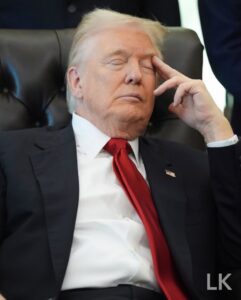
Speaking on the floor of the House of Representatives, Representative Sydney Kamlager-Dove of California argued that the public deserves more information about the president’s medical condition. Her comments focused on instances in which Trump has appeared to close his eyes for extended periods during public events, Cabinet meetings, and press conferences.
According to Kamlager-Dove, these moments have prompted questions about whether the president is fully alert during important government functions. She suggested that concerns about the president’s attentiveness could have implications for national security and decision-making.
The California Democrat questioned whether the president’s behavior during public appearances could reflect a broader issue. She argued that Americans should have confidence that their commander-in-chief is fully engaged during classified briefings, meetings with foreign leaders, and other responsibilities associated with the office.
The remarks are part of a broader debate surrounding the age and health of political leaders in the United States. At 79 years old, Trump became one of the oldest individuals to serve as president. His age has frequently been discussed by both supporters and critics, particularly as questions about the physical and cognitive health of elected officials continue to play a significant role in national politics.
The White House has consistently rejected claims that Trump has fallen asleep during official events. Administration officials have stated that photographs or brief video clips showing the president with his eyes closed do not accurately represent the full context of those moments. They argue that such images can be misleading and do not provide evidence that the president was asleep.
Officials have maintained that Trump remains highly active and engaged in his duties. They point to his demanding schedule, frequent public appearances, and ongoing involvement in domestic and international affairs as evidence of his ability to perform the responsibilities of the presidency.
Despite those assurances, some Democratic lawmakers have continued to express concerns. Representative Ted Lieu of California recently echoed similar criticisms, suggesting that several public appearances have raised questions about the president’s condition.
Lieu argued that repeated images and videos showing Trump with his eyes closed have fueled public speculation. He claimed that the pattern deserved closer scrutiny and should not be dismissed without explanation.
The debate intensified following the circulation of photographs taken during a professional basketball game. Some observers interpreted the images as showing Trump asleep while attending the event. Critics used the photographs to question the president’s stamina and attentiveness.
Supporters of the president, however, rejected those interpretations. They argued that still photographs can capture individuals in unflattering or misleading moments and do not necessarily indicate that someone was sleeping. They also noted that brief moments with closed eyes are common and can occur for many reasons.
The White House responded forcefully to the criticism. Administration representatives described Trump as energetic, focused, and fully capable of carrying out the duties of the presidency. They contrasted his performance with criticisms that had previously been directed at former President Joe Biden regarding age and health concerns.
According to administration officials, Trump maintains a demanding work schedule and remains deeply involved in government operations. They have argued that his public appearances, meetings, and policy initiatives demonstrate a level of engagement inconsistent with claims that he is frequently asleep or unable to perform his duties.
Trump himself has long rejected suggestions that he suffers from cognitive decline. Throughout his political career, he has frequently pointed to the results of cognitive assessments and medical examinations as evidence that he remains healthy and mentally sharp.
The president has repeatedly highlighted his performance on cognitive tests and has often characterized himself as possessing exceptional mental abilities. He has dismissed criticism regarding his age and fitness for office, arguing that his record and achievements speak for themselves.
Medical transparency has become a recurring issue in American politics. Presidents are not required to disclose every detail of their medical history, but many administrations choose to release information intended to reassure the public about a president’s health.
The Trump administration has periodically released medical evaluations indicating that the president is in good health. These reports have generally portrayed him as capable of carrying out the responsibilities associated with the office.
Nevertheless, critics have argued that additional information would help address lingering questions. Some lawmakers have called for more detailed disclosures regarding medical procedures, medications, and other aspects of the president’s healthcare.
Supporters counter that such demands are often politically motivated and exceed what has traditionally been expected from presidents. They argue that the information already provided is sufficient and that opponents are attempting to create controversy where none exists.
The discussion surrounding presidential health is not unique to Trump. Questions about the physical and cognitive condition of presidents have arisen repeatedly throughout American history. Leaders from both major political parties have faced scrutiny regarding their age, stamina, and medical conditions while serving in office.
Advances in media technology have intensified those debates. In the modern era, every public appearance is recorded, photographed, and analyzed in real time. As a result, brief moments that might once have gone unnoticed can quickly become the subject of widespread discussion online and in traditional media.
Political observers note that perceptions can be shaped by selective clips and images. A single photograph may generate significant attention, even when it captures only a fraction of a longer event. This reality has made disputes over context increasingly common in modern political discourse.
The controversy also highlights the broader role that health plays in presidential campaigns and governance. Voters often view a candidate’s physical and mental condition as an important factor when evaluating leadership ability.
As political divisions remain strong, questions about health can become highly partisan. Supporters and opponents frequently interpret the same evidence in dramatically different ways, leading to competing narratives about a leader’s capabilities.
For now, the disagreement over Trump’s public appearances is unlikely to disappear. Democratic lawmakers continue to call for greater transparency, while the White House insists that the president remains fully capable of performing his duties.
The debate reflects broader concerns about age, leadership, and accountability in American politics. It also underscores the intense scrutiny faced by modern presidents, whose every action is closely monitored by political allies, opponents, journalists, and the public.
Whether additional information will be released remains uncertain. However, the discussion surrounding presidential health is expected to continue as lawmakers, media organizations, and voters seek reassurance about the fitness of those entrusted with the nation’s highest office.
As the political conversation unfolds, both sides remain firmly committed to their positions. Critics argue that transparency is essential for maintaining public trust, while supporters insist that the president’s record and daily performance provide ample evidence of his ability to lead.
The issue has become another flashpoint in the ongoing political battles that define Washington. While opinions differ sharply, the controversy demonstrates how questions about leadership and health remain central topics in American public life.
Ultimately, the debate is less about a single photograph or isolated moment and more about the standards that Americans expect from their elected leaders. As the country continues to navigate complex domestic and international challenges, questions about presidential fitness are likely to remain part of the national conversation for the foreseeable future.