When my stepmother got sick, I stayed.
Not because anyone asked me to.
Not because I expected anything in return.
I stayed because someone had to.
Her son certainly wasn’t going to do it.
He lived less than an hour away, yet somehow weeks passed without a single visit. No phone calls. No warm meals dropped off. No sitting beside her bed during the long nights when pain kept her awake.
At first, she defended him.
“He’s busy,” she would whisper whenever I noticed the disappointment in her eyes.
But eventually, even she stopped making excuses.
Illness has a way of revealing who people truly are.
And during those final months, I became the one person she could rely on completely.
I cooked for her when nausea made eating difficult. I cleaned the house when she became too weak to move around safely. I sat with her through endless appointments, medication schedules, sleepless nights, and quiet moments of fear she tried hard to hide.
Sometimes she would apologize for being a burden.
Every single time, I told her the same thing:
“You’re not a burden.”
And I meant it.
My father had passed away years earlier, and although my relationship with my stepmother had never been perfect, there was still love between us—quiet, imperfect, but real.
She had entered my life when I was twelve.
Neither of us knew exactly how to navigate that at first.
There were awkward years.
Arguments.
Distance.
Misunderstandings.
But there were also packed school lunches, birthday cakes, rides to practice, and nights she stayed awake waiting for me to get home safely as a teenager.
Love doesn’t always arrive dramatically.
Sometimes it grows slowly in ordinary moments until one day you realize someone has become family.
That’s what happened with us.
As her condition worsened, I eventually moved into her house full-time.
She hated being alone at night.
Some evenings, after helping her into bed, I would sit beside her reading aloud from old novels while rain tapped softly against the windows.
Those moments felt strangely peaceful despite everything.
Once, while I brushed her thinning hair gently, she looked at me with tears in her eyes and whispered:
“You have your father’s heart.”
I never forgot that.
Another night, she squeezed my hand weakly and said:
“You’re a good son, even if you weren’t mine by blood.”
That stayed with me too.
Especially because deep down, I think she knew her own son had already emotionally abandoned her long before her body began failing.
The night she died was quiet.
Peaceful, even.
A storm rolled softly outside while I sat beside her bed reading one of her favorite books. Her breathing had become shallow hours earlier, but she still smiled faintly every time she recognized my voice.
At one point, she reached for my hand.
I held hers tightly.
And then, somewhere between one sentence and the next, her breathing slowed…
and stopped.
I sat there for a long time afterward.
Not crying.
Not moving.
Just listening to the terrible silence that follows the moment someone leaves the world.
Before she passed, she whispered one final thing:
“Thank you for not letting me die alone.”
I think that sentence broke me more than her death itself.
The funeral took place three days later.
The church was full.
People spoke warmly about her kindness, her generosity, her faith.
Her son stood near the front wearing an expensive black suit and a carefully rehearsed expression of grief. He accepted condolences gracefully, shaking hands and nodding solemnly like a man carrying tremendous sorrow.
But I noticed something else too.
Detachment.
As though he was performing grief rather than feeling it.
I stayed mostly quiet throughout the service.
My grief felt too personal to display publicly.
Afterward came the reading of the will.
The lawyer unfolded the paperwork while family members gathered around in tense silence.
Then the list began.
The house.
Her savings.
The jewelry.
The car.
The furniture.
Every possession she owned.
Everything went to her biological son.
There wasn’t a single mention of me.
For one brief moment, I felt the sting of it.
Not because I wanted her money.
And not because I thought caregiving entitled me to reward.
But because part of me had hoped I mattered to her more than that.
Still, the feeling passed quickly.
I had not cared for her to earn anything.
I had cared for her because she mattered.
And honestly, being with her during those final months already felt more valuable than any inheritance.
I was prepared to let it go peacefully.
Then her son opened his mouth.
“Well,” he announced loudly, smirking as he glanced toward me, “looks like being the devoted little caretaker didn’t pay off after all.”
A few people shifted uncomfortably.
Someone muttered, “That’s unnecessary.”
But he continued anyway.
“I guess kindness doesn’t come with bonuses these days.”
He laughed softly at his own joke.
The room went silent.
I remember staring at him calmly while everyone waited for some kind of reaction.
But I didn’t give him one.
I didn’t argue.
Didn’t insult him.
Didn’t defend myself.
Because honestly?
Anyone cruel enough to mock someone at a funeral was already exposing exactly who they were.
And deep down, I think everyone there knew it.
So I walked away quietly.
That night, for the first time in months, I slept deeply.
The kind of exhausted sleep that only comes after carrying someone else’s suffering for too long.
I thought the story had ended there.
I was wrong.
The next morning, my phone started ringing before sunrise.
Once.
Twice.
Five times in a row.
By the seventh call, I finally answered groggily.
It was him.
But the arrogance from the funeral was gone completely.
His voice shook violently.
“You need to come over,” he said urgently.
I sat up immediately.
“What happened?”
“There’s… there’s something in the attic.”
“What?”
“Please,” he whispered. “Just come.”
Something about his tone unsettled me instantly.
I got dressed and drove over.
When I arrived, he was pacing outside the house looking pale and visibly shaken.
For a moment, he barely looked like the same man who mocked me the previous afternoon.
“What’s going on?” I asked.
He swallowed hard.
“I found something.”
He led me inside silently.
The house felt different now without her.
Still.
Empty.
The faint scent of lavender lingered in the hallway—the perfume she always wore.
We climbed the narrow attic stairs together.
Dust floated through beams of morning sunlight cutting across the dark space.
Near the far wall sat an old wooden chest.
He pointed toward it nervously.
“It was locked,” he explained. “I found a key taped underneath the dresser downstairs.”
I frowned.
“And?”
“There was a letter inside.”
My stomach tightened.
“For me,” he added quietly.
Then he corrected himself.
“No. For you.”
Something inside me froze.
He handed me a sealed envelope with my name written carefully across the front in her unmistakable handwriting.
I stared at it silently.
“Why did you call me?” I finally asked.
He looked ashamed.
“Because I opened it.”
I blinked.
“You opened my letter?”
“I only read the first few lines,” he admitted quickly. “I thought maybe it explained something about the will.”
I opened the envelope slowly.
Inside was a folded letter and another smaller sealed envelope.
Her handwriting appeared steady despite whatever pain she must have been enduring when she wrote it.
My dear,
If you are reading this, then I am finally at peace.
I know the will must have hurt you. Please believe me when I say it was never a reflection of how much you meant to me.
Your father and I were bound by legal agreements that made changing certain things impossible after his passing. But there was one thing no one knew about except me.
Inside this envelope is the deed to the lake cottage in Rosewood.
It belongs to you now.
Your father and I bought it many years ago, and I kept it under my name alone. I transferred ownership before my death because I wanted you to have something that carried love rather than obligation.
You cared for me when you owed me nothing.
You stayed when others disappeared.
You gave me dignity during the hardest season of my life.
As for my son… he still has much to learn.
Love cannot be inherited.
It must be earned.
By the time I finished reading, my hands were trembling.
Beside me, her son looked pale.
“She left you property?” he whispered.
I nodded slowly.
“But why?”
I looked directly at him.
“Because I stayed.”
The silence afterward felt enormous.
For once, he had nothing sarcastic to say.
Inside the smaller envelope was a key and the address to the cottage.
Later that afternoon, I drove there alone.
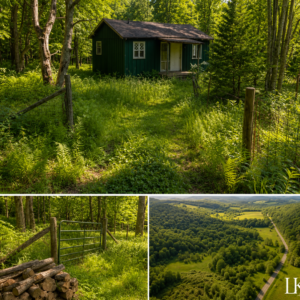
The lake house sat tucked beside a quiet stretch of forest overlooking calm blue water. It was modest but beautiful in the kind of peaceful, timeless way she always loved.
White curtains fluttered gently in the breeze.
Old books lined wooden shelves.
The entire place smelled faintly like lilacs and cedar.
And there, sitting on the mantle, was a framed photograph of my father, my stepmother, and me during a summer picnic decades earlier.
I stared at it for a long time.
I hadn’t even known she kept that picture.
Behind the frame, I found another handwritten note.
If you found this, then you’re finally home.
This place was where I felt happiest.
I hope it becomes your safe place too.
And please… forgive him someday.
He never learned how to love gently.
I sat quietly on the porch that evening watching sunlight ripple across the lake while grief settled differently inside me.
Softer now.
Not lighter exactly.
But clearer.
That night, her son called again.
“I found her journals,” he said quietly.
I didn’t respond immediately.
“She wrote about you constantly,” he continued. “About how proud she was. About how grateful she felt.”
His voice cracked slightly.
“She wished I had been more like you.”
For the first time, I heard genuine shame in his voice.
Not defensiveness.
Not ego.
Regret.
A few days later, he came to visit the cottage.
He looked exhausted.
Smaller somehow.
We sat together on the porch overlooking the water while evening settled around us.
“I spent my whole life assuming she’d love me no matter what,” he admitted quietly. “I thought being her son automatically guaranteed that.”
I listened silently.
“But you earned her trust,” he continued. “You showed up when it mattered.”
After a long pause, he added softly:
“I’m sorry.”
And surprisingly, I believed him.
Not because apologies erase pain.
But because grief has a strange way of stripping people down to who they really are.
Over the following months, he started visiting regularly.
At first awkwardly.
Always bringing tools or offering repairs around the cottage as though trying to compensate for years of emotional absence.
Eventually, those visits became easier.
We drank coffee together on the porch.
Shared stories about her.
Laughed about small things she used to do.
Slowly, something damaged between us began healing.
Not perfectly.
Not completely.
But honestly.
One evening, while watching the sunset over the lake, he sighed and said:
“I think the letter was her final lesson to me.”
“What lesson?”
“That love isn’t measured by what someone leaves you after they die.”
He stared out across the water quietly.
“It’s measured by how you treated them while they were alive.”
I think that was the moment he finally understood.
The following spring, I transformed the cottage into a small retreat for hospice caregivers—a peaceful place where exhausted caretakers could rest for free.
I named it Mara’s Haven in her honor.
Her son helped renovate the kitchen.
Sometimes while working, he would pause and smile faintly.
“She’d love this,” he’d say.
And I think she would have.
We never became brothers exactly.
But we became something close to family.
Not through blood.
Not through inheritance.
But through shared grief, honesty, and the difficult work of becoming better people.
Years later, I still think about the morning he mocked me at her funeral.
At the time, it felt cruel.
Humiliating.
But now I realize that moment wasn’t the real ending to our story.
The real ending came later—
in the attic,
inside a hidden letter,
where one woman’s final act of honesty changed everything.
Because karma doesn’t always arrive as punishment.
Sometimes it arrives as truth.
Sometimes it arrives as regret.
And sometimes it arrives as the painful realization that love was never something you were entitled to in the first place.
He inherited her house.
But through her final gift, I inherited something far more valuable:
the proof that being present matters,
that kindness matters,
and that love given freely always leaves a legacy behind.