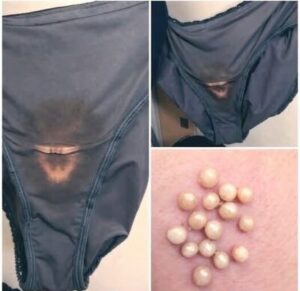
 For many women, discovering pale or bleach-like marks in the crotch area of underwear can be confusing, surprising, or even embarrassing. The discoloration often appears most clearly on darker fabrics, leading many to wonder whether laundry detergent, poor fabric quality, hygiene issues, or an unknown health problem could be responsible.
Some women first notice these marks during adolescence and quietly worry that something is wrong with their bodies. Others try changing soaps, switching laundry products, buying different underwear, or washing clothes more carefully, only to find that the same fading appears again. Because this topic is not always discussed openly, many people spend years feeling confused about something that is actually very common.
In most cases, these bleach-like stains are not a sign of anything harmful. They are often a normal result of healthy vaginal chemistry.
The explanation comes down to vaginal pH. A healthy vagina usually maintains a mildly acidic environment. This acidity helps protect against harmful bacteria and supports a balanced vaginal microbiome. Beneficial bacteria, especially lactobacilli, play an important role in this process by helping maintain that protective acidic balance.
Vaginal discharge is also a normal part of the body’s self-cleaning process. It helps remove old cells, maintain moisture, and support a healthy internal environment. Because this discharge can carry traces of natural acidity, it may gradually affect fabric dye when it comes into contact with underwear over time.
That is why some underwear may develop pale, faded, or bleach-like patches.
In simple terms, the body’s natural protective chemistry can lighten fabric dye.
This can be surprising because the word “acidic” may sound harsh or unhealthy. But in this case, mild acidity is actually important. It helps the body protect itself and maintain balance. What looks like a stain may simply be visible evidence of a healthy biological process happening quietly every day.
Doctors generally explain that bleach-like marks alone are usually not a cause for concern, especially when there are no other symptoms. If there is no itching, burning, pain, strong odor, unusual color, or major change in discharge, the discoloration is often just a normal result of body chemistry.
Not every woman notices the same amount of discoloration. Fabric type, dye quality, moisture levels, hormone changes, and the amount of natural discharge can all affect how visible the marks become. Dark underwear often makes the fading easier to see, while lighter fabrics may hide it more.
Hormones can also influence the process. Throughout the menstrual cycle, discharge may change in amount, texture, and consistency. Around ovulation, for example, many women notice more discharge than usual. These natural changes can make fabric fading more noticeable at certain times of the month.
One important thing to understand is that trying to “fix” this with harsh soaps, scented products, or internal cleansing can actually cause more problems. The vagina is self-cleaning, and using strong products can disrupt the natural pH balance and reduce beneficial bacteria. That may increase the risk of irritation or infection.
Gentle external washing with mild products is usually enough. The goal should not be to eliminate the body’s natural chemistry, because that chemistry is part of what helps keep the body healthy.
Still, it is important to know when to seek medical advice. Bleach-like stains by themselves are usually harmless, but symptoms such as persistent itching, burning, pain, strong unpleasant odor, green or gray discharge, unusual thick discharge, bleeding outside normal periods, or sudden major changes should be discussed with a healthcare professional.
The difference matters. Normal discharge and mild fabric fading are common. Discomfort, odor, pain, or unusual changes may point to an infection or another issue that deserves attention.
This topic also reveals a larger problem: many women are not taught enough about normal vaginal health. Because natural body functions are sometimes treated as embarrassing, ordinary experiences can become sources of shame or anxiety. When people do not receive clear information, they may assume something is wrong even when their body is functioning normally.
That is why open, accurate education is so important. Understanding vaginal pH, discharge, and the role of beneficial bacteria can help reduce unnecessary worry. It can also help women recognize real warning signs without panicking over normal changes.
There are practical ways to manage the discoloration if it bothers you. Some women choose breathable cotton underwear, patterned fabrics, or lighter colors where marks are less noticeable. Others simply accept the fading as normal and replace underwear when needed. What matters most is comfort, hygiene, and health, not keeping fabric perfectly unchanged.
In the end, bleach-like marks in underwear are often not a sign of poor hygiene or a hidden problem. They are usually a normal result of vaginal acidity, beneficial bacteria, and the body’s natural self-cleaning process.
What once seemed mysterious or embarrassing becomes much less worrying when understood clearly. The body is not malfunctioning. In many cases, it is doing exactly what it is designed to do: maintaining balance, protecting itself, and supporting health every day.